Pipe Nipples for HVAC and Fire Protection Systems: What You Need to Know
- pcfspn1
- Oct 29, 2025
- 2 min read
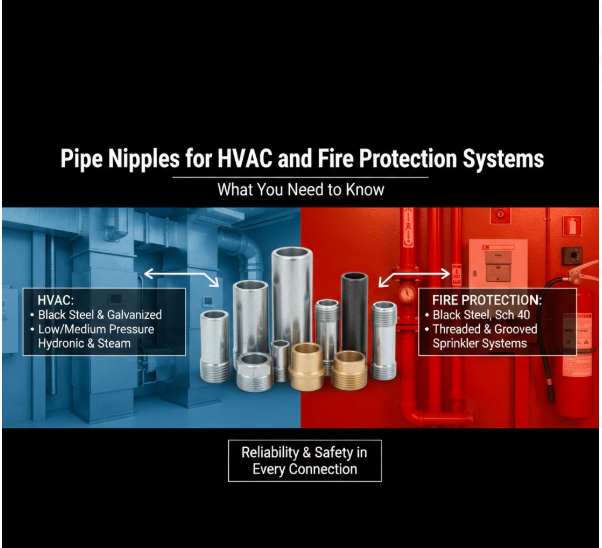
Pipe nipples are small but important parts in many systems. They help connect pipes in heating, ventilation, air conditioning (HVAC), and fire protection setups. If you work in building or maintenance, you need to know about them. Here we will explain what pipe nipples are, how they are used, and why they matter. We will keep things simple and easy to understand.
What Are Pipe Nipples?
A pipe nipple is a short piece of pipe with threads on both ends. It joins two other pipes or fittings together. They come in different sizes and materials like steel, brass, or plastic. The threads make it easy to screw them in place. Close nipples are very short, while barrel nipples are longer. Choosing the right one depends on your needs.
Pipe Nipples in HVAC Systems
HVAC systems keep buildings cool or warm. Pipe nipples help connect pipes that carry water or air. For example, in a heating system, they link boilers to radiators. They must be strong to handle pressure and heat. Galvanized pipe nipples are good because they do not rust easily. This keeps the system working well for a long time.
Pipe Nipples in Fire Protection Systems
Fire protection systems, like sprinklers, save lives by putting out fires. Pipe nipples are key here too. They connect pipes in sprinkler lines. Threaded pipe nipples make installation quick. In fire systems, they need to be reliable under high water pressure. Stainless steel ones are often used because they last longer in wet conditions.
When picking pipe nipples for these systems, look for a good pipe nipple manufacturer. A trusted maker ensures the parts meet safety standards like ASTM or ANSI. This helps avoid leaks or breaks during an emergency.
Types of Pipe Nipples
There are many types to choose from:
Threaded nipples: Common for easy connections.
Grooved nipples: Used in big systems for quick joins.
Black iron nipples: Strong and cheap for indoor use.
Corrosion-resistant nipples: Best for places with water or chemicals.
Pick the type that fits your system. Sizes range from small to large, like 1/2 inch to 6 inches.
How to Install Pipe Nipples
Installing is simple if you follow steps:
Measure the space needed.
Clean the threads on pipes.
Apply tape or sealant to threads.
Screw the nipple in place.
Check for leaks after.
Always use tools like wrenches. If you are not sure, ask a pro. Wrong installation can cause problems.
Conclusion
Pipe nipples are vital for HVAC and fire protection. They make systems work safely and well. By knowing the basics, you can choose and use them right. If you need more details, check standards or talk to experts. Stay safe!

Comments